Blackheads can be stubborn, especially around the nose, forehead, and chin. Because they look like tiny dark spots trapped inside pores, it can be tempting to reach for household ingredients that promise a quick fix. Hydrogen peroxide is one of the remedies you’ll find online, but that doesn’t make it a good choice for treating blackheads.
Hydrogen peroxide is an oxidizing substance, and stronger concentrations can damage skin. Although specially formulated low-concentration hydrogen peroxide products have been studied for acne, that evidence should not be confused with using household hydrogen peroxide directly on your face.
Here’s what you should know about blackheads, hydrogen peroxide, and safer ways to manage clogged pores.
What Is A Blackhead?
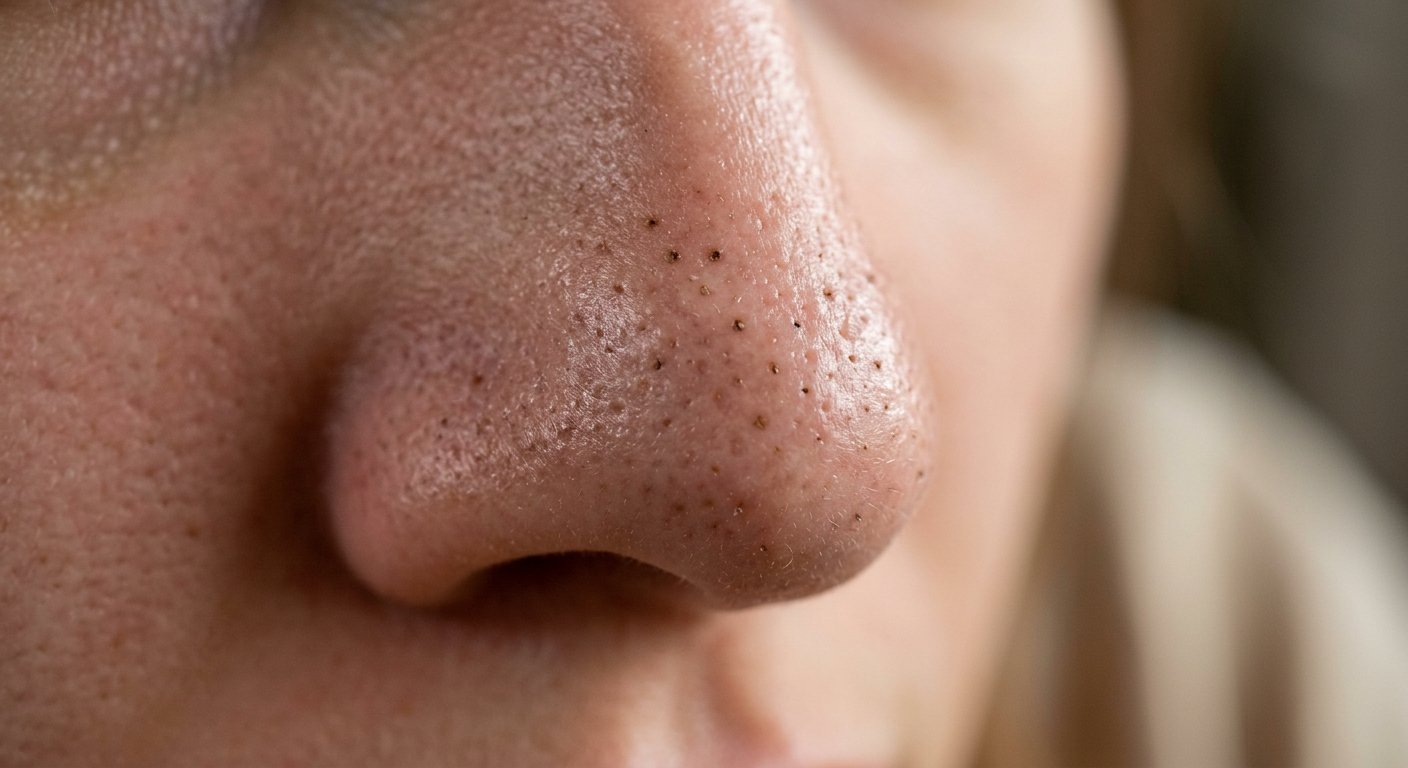
A blackhead is a type of acne called an open comedone. It forms when oil and dead skin cells build up inside a hair follicle and the opening remains exposed to air. The dark color isn’t dirt; it develops when the material in the pore undergoes oxidation.
That means scrubbing harder isn’t the answer. The American Academy of Dermatology specifically advises against scrubbing blackheads because irritation can make acne worse.
Key Takeaways
- Household hydrogen peroxide isn’t a recommended DIY treatment for blackheads.
- Hydrogen peroxide has been studied in specially formulated dermatological products, but those products are different from applying a household solution to your face.
- Stronger hydrogen peroxide exposure can irritate or injure skin.
- Proven acne ingredients such as adapalene and salicylic acid are better-supported options for managing clogged pores.
- Avoid harsh scrubs, squeezing, and DIY chemical treatments when trying to clear blackheads.
Should You Use Hydrogen Peroxide To Remove Blackheads?
It’s better not to use household hydrogen peroxide as a blackhead treatment.
There is an important distinction between hydrogen peroxide as an ingredient in a professionally formulated product and the bottle of hydrogen peroxide commonly kept around the home.
Clinical studies have investigated stabilized hydrogen peroxide formulations for mild-to-moderate acne, with some showing reductions in acne lesions. Those studies used specific formulations and controlled concentrations, not homemade blackhead treatments.
Hydrogen peroxide also has oxidizing properties that can irritate living tissue. Higher concentrations can cause substantially more serious skin injury.
For that reason, using it as a DIY blackhead remover isn’t worth the risk when better-established options are available.
Why Hydrogen Peroxide May Turn Skin White
If hydrogen peroxide comes into contact with skin, it can sometimes produce temporary whitening or blanching.
That visual change doesn’t mean the blackhead is being “pulled out” or that the treatment is working. Hydrogen peroxide can affect the superficial blood vessels and skin through its oxidizing action. Temporary skin blanching has been documented after exposure even to 3% hydrogen peroxide.
So don’t use the whitening effect as a measure of whether a blackhead treatment is effective.
Potential Side Effects Of Hydrogen Peroxide On Skin
Applying hydrogen peroxide to the face can cause irritation, particularly with repeated exposure or stronger concentrations.
Possible reactions include:
- Redness
- Dryness
- Stinging or burning
- Irritation
- Temporary whitening
- Blistering or more serious skin injury with stronger exposure
The severity depends partly on concentration and exposure time. Research reviewing topical hydrogen peroxide notes that higher concentrations can cause significant skin damage.
If hydrogen peroxide gets into your eyes or causes a significant skin reaction, seek appropriate medical attention.
Safer Ways To Treat Blackheads
You don’t need a harsh DIY treatment to manage blackheads. Dermatologists generally recommend ingredients that address clogged pores without relying on physical abrasion.
Salicylic Acid
Salicylic acid is a common acne ingredient that can help unclog pores. It is particularly useful for blackheads and whiteheads because it helps remove excess material from within the pore.
Start with a product formulated for facial use and follow its directions rather than combining several strong acne treatments at once.
Adapalene
Adapalene is a topical retinoid that can help clear clogged pores and prevent new blackheads from forming. The American Academy of Dermatology lists adapalene among the nonprescription treatments that can help with blackheads and whiteheads.
It can take several weeks to see improvement, so consistency matters more than trying to force a quick result.
Gentle Cleansing
A gentle cleanser can remove excess oil, makeup, sunscreen, and surface debris without the need for aggressive scrubbing.
Blackheads are not simply dirt sitting on the surface, so repeatedly washing or scrubbing harder won’t necessarily clear them.
Professional Extraction
If you have stubborn blackheads that don’t respond to skincare, professional extraction is an option.
Dermatologists can use sterile instruments to remove blackheads and whiteheads safely. The American Academy of Dermatology notes that professional extraction can be useful when other acne treatments haven’t cleared the blemishes.
What To Avoid When Removing Blackheads
Trying to remove blackheads aggressively can leave you with irritated skin.
Avoid:
- Scrubbing your face with harsh powders
- Picking or squeezing blackheads repeatedly
- Applying household chemicals to your skin
- Using multiple strong acne treatments simultaneously
- Scraping the skin with sharp or abrasive objects
- Using lemon juice or other acidic kitchen ingredients as DIY treatments
The goal is to keep the pore clear while protecting the surrounding skin.
Frequently Asked Questions
Does hydrogen peroxide dissolve blackheads?
There isn’t enough evidence to recommend household hydrogen peroxide for dissolving blackheads. Better-supported acne treatments, including salicylic acid and adapalene, are designed specifically to address clogged pores.
Can hydrogen peroxide make blackheads worse?
It can irritate and dry the skin, particularly when used repeatedly or at inappropriate concentrations. Irritated skin can become more uncomfortable and harder to manage.
What is the safest way to remove blackheads?
For mild blackheads, a consistent routine containing an appropriate acne ingredient such as salicylic acid or adapalene is generally preferable to DIY chemical treatments. Persistent or difficult-to-treat blackheads can be assessed by a dermatologist.
Can I squeeze my blackheads?
It’s better to avoid repeatedly squeezing them yourself. Picking can irritate the skin and increase the risk of inflammation or marks. Professional extraction is a safer option when physical removal is appropriate.
How long does it take to clear blackheads?
Blackheads usually don’t disappear overnight. Acne treatments need consistent use, and the AAD notes that improvement can take several weeks.
Is hydrogen peroxide safe for acne?
Some specially formulated hydrogen peroxide products have been studied for mild-to-moderate acne, with clinical trials reporting benefits. That does not mean household hydrogen peroxide should be substituted for those products.
When should I see a dermatologist for blackheads?
Consider professional advice if your acne is persistent, painful, widespread, leaving scars or dark marks, or not improving with appropriate over-the-counter treatment. Dermatologists can determine whether you’re dealing with ordinary blackheads or another type of skin concern.