
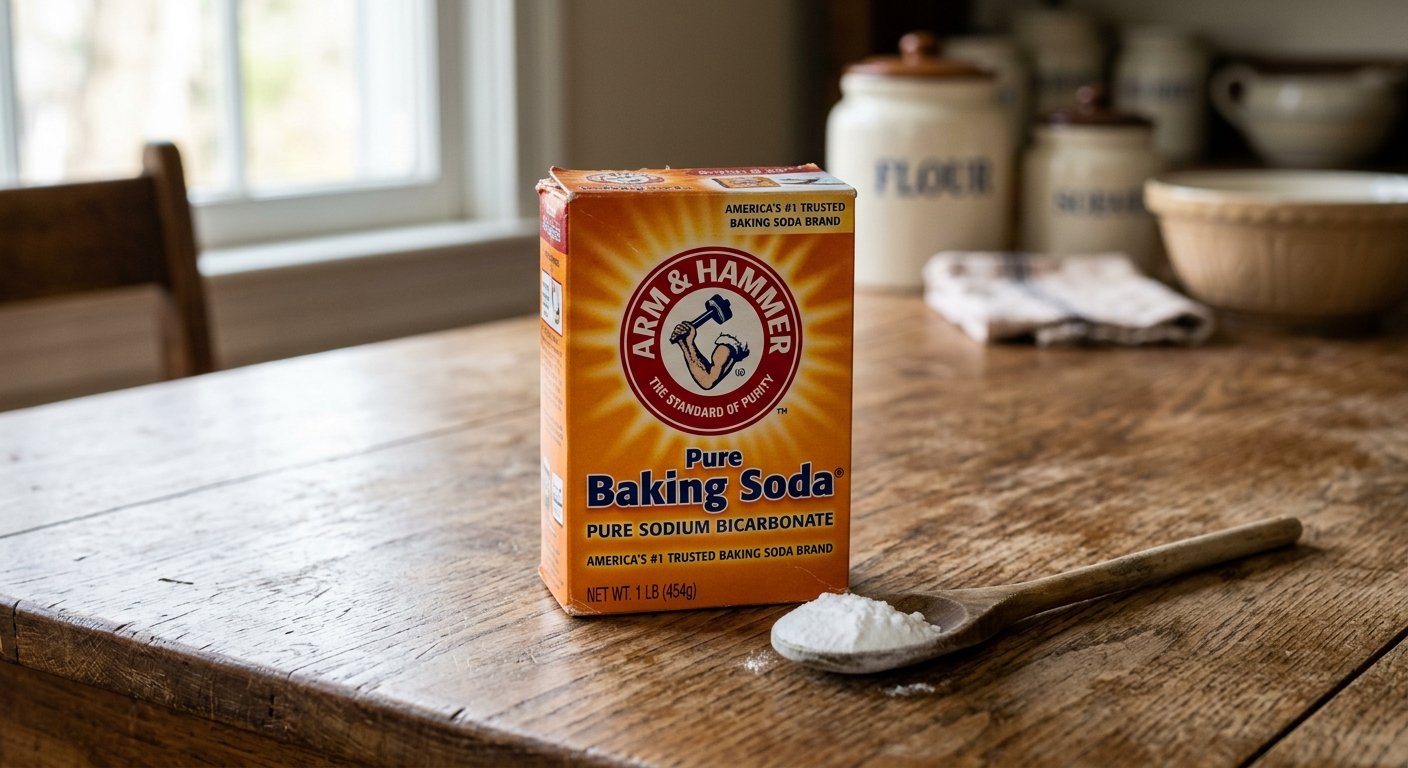
Baking soda is one of those inexpensive kitchen staples that keeps turning up in DIY beauty routines. It has been promoted for everything from acne and dark spots to body odor, rough feet, dandruff, and teeth whitening.
But there is an important distinction between what baking soda can potentially do and what it has actually been shown to do. Sodium bicarbonate is alkaline, with a pH around 8–9, while healthy skin has a naturally acidic surface. Using it too often or in concentrated mixtures can therefore cause dryness and irritation.
So, before putting a baking-soda mixture on your face, scalp, or body, here’s a more evidence-based look at its popular beauty uses.
Beauty Benefits of Baking Soda
Baking soda, or sodium bicarbonate, does have some legitimate uses in personal care. Research has explored its role in certain dermatological conditions, itching, microbial activity, cleansing, and even some oral-care applications. However, that does not mean every DIY baking-soda remedy is effective or safe.
Many of the popular recipes online involve applying concentrated baking soda directly to the skin. Those uses have considerably less evidence behind them and can be irritating.
1. Baking Soda for Acne
Baking soda is sometimes promoted as an acne treatment because it has mild antimicrobial properties and can physically exfoliate the skin.
That doesn’t make it a good replacement for established acne treatments. Its alkalinity can interfere with the skin’s normal environment and potentially leave the face dry or irritated. For acne-prone skin, especially skin that is already inflamed, a gentle cleanser and proven acne ingredients are generally a better choice.
Avoid scrubbing baking soda into active pimples. Mechanical irritation can make already-sensitive skin more uncomfortable.
2. Baking Soda for Blemishes
Baking soda is often mixed with lemon juice in DIY treatments for dark spots and acne marks. This is one combination worth skipping.
There is no good reason to use a harsh baking-soda-and-lemon mixture to fade pigmentation. Lemon juice can irritate skin, while baking soda can disrupt its normal pH. Irritation itself can also make uneven pigmentation more difficult to manage.
If discoloration is your concern, daily sunscreen and appropriately formulated ingredients are a much more sensible approach.
3. Baking Soda for Large Pores
Baking soda cannot permanently shrink or close your pores.
Pore appearance can vary with oil production, genetics, age, and the amount of material inside the pore. Baking soda may temporarily remove surface oil, but that is different from changing pore size.
Using an alkaline powder as a facial toner can also leave the skin dry and uncomfortable, so it isn’t a worthwhile trade-off.
4. Baking Soda for Dark Neck Skin
A darkened neck can have many possible causes, including friction, irritation, pigmentation changes, and certain medical conditions.
There is not enough evidence to recommend baking soda as a treatment for dark neck skin. Applying it repeatedly may actually irritate the area and make discoloration more noticeable.
If a darker patch develops suddenly, becomes thicker or velvety, or doesn’t improve, it is better to have it assessed rather than repeatedly exfoliating it at home.
5. Baking Soda for Glowing Skin
The idea behind baking-soda face masks is usually simple: remove surface buildup and dead skin cells so the skin looks smoother.
The problem is that “more exfoliation” does not automatically mean healthier-looking skin. Baking soda’s alkaline nature can disturb the skin barrier, particularly when it is used frequently or rubbed into the face.
For a healthy-looking complexion, gentle cleansing, moisturizer, and consistent sun protection are more reliable basics.
6. Baking Soda for Oily Skin
Because baking soda can absorb moisture and remove surface oils, it may leave oily skin feeling temporarily less greasy.
That doesn’t mean it should be used as a facial scrub. Removing too much surface oil and irritating the skin can leave you with dryness, tightness, or increased sensitivity.
If your skin is oily, choose a gentle cleanser and products formulated for oil control rather than relying on repeated baking-soda applications.
7. Baking Soda for Rashes
Baking soda has been investigated for certain types of itching and dermatological discomfort, particularly when used appropriately in baths. Research has also examined its use in conditions such as psoriasis and aquagenic pruritus.
That is very different from putting a concentrated baking-soda-and-oil paste on an unexplained rash.
A rash can have many causes, including irritation, allergy, infection, or an underlying skin condition. If you don’t know what’s causing it, treating it with a DIY mixture may make the problem worse.
8. Baking Soda for Dark Lips
Baking soda is sometimes recommended as a lip scrub, but there is no good evidence that it safely lightens naturally darker lips.
The lips are delicate, and repeated physical or chemical irritation can cause dryness and discomfort. If your lips are dry, a simple fragrance-free lip balm is a safer choice than an abrasive DIY scrub.
9. Baking Soda for Whitening Teeth
This is one area where baking soda has a more established role.
Sodium bicarbonate is used in some oral-care products because its mild abrasiveness can help remove surface stains, making teeth appear cleaner or brighter. It does not bleach the natural color of teeth in the same way as peroxide-based whitening treatments.
Rather than brushing with loose baking soda frequently, consider using a toothpaste formulated with fluoride and, if desired, baking soda.
10. Baking Soda for Moles
Do not use baking soda to try to remove a mole.
DIY recipes involving baking soda, vinegar, hydrogen peroxide, or other corrosive ingredients can damage the surrounding skin without safely addressing what the mole actually is.
A changing, bleeding, itching, or unusual mole should be evaluated by a healthcare professional. Home removal can also make proper diagnosis more difficult.
11. Baking Soda for Facial Hair
There is no good evidence that applying baking soda to the face will safely destroy hair follicles or provide permanent hair removal.
Leaving concentrated baking soda on facial skin for hours, particularly overnight, is unnecessary and can cause irritation.
For unwanted facial hair, established hair-removal methods are a safer option.
12. Baking Soda for Ingrown Hair
Exfoliation can sometimes help prevent dead skin from accumulating around hair follicles, but baking soda is not a proven treatment for ingrown hairs.
Avoid aggressively scrubbing an irritated bump or digging into the skin with tweezers. That can increase irritation and the risk of infection.
If ingrown hairs are frequent or painful, a dermatologist can help identify a better prevention strategy.
13. Baking Soda for Thick Hair
The “no-poo” trend has included baking soda as an alternative to shampoo, but baking soda is not a proven way to make hair thicker or stimulate new growth.
Its alkaline nature may also be harsh on the hair and scalp when used repeatedly. Evidence for baking soda as a hair-care treatment remains limited, and the dermatology literature specifically notes the need for more research on its safety and effectiveness for hair.
If your hair suddenly becomes thinner, the cause is worth investigating rather than trying to treat it with household ingredients.
14. Baking Soda for Dandruff
Baking soda is sometimes used as a scalp exfoliant because of its texture.
However, dandruff is not simply a buildup of dead skin that needs aggressive scrubbing. Repeatedly applying an alkaline substance can irritate the scalp.
For persistent dandruff, an appropriately formulated anti-dandruff shampoo is generally a more reliable choice.
15. Baking Soda for Your Feet
Baking-soda baths may help soften the feeling of rough skin, and baking soda has been studied in certain dermatological bath treatments.
If you use a foot soak, keep it gentle and avoid aggressively scraping the softened skin afterward. Moisturizing regularly is usually more useful for dry feet than repeated exfoliation.
Don’t use baking soda on cracked or damaged skin without professional advice.
16. Baking Soda for Body Odor
Baking soda can absorb moisture and alter the environment in which odor develops, which explains why it appears in some natural deodorant products.
However, it does not stop sweating in the way an antiperspirant does.
Direct application can also irritate the underarms, particularly after shaving. If a baking-soda deodorant causes burning, redness, or persistent itching, stop using it.
17. Baking Soda for Armpits
Baking soda is sometimes promoted for controlling odor or lightening dark underarms.
There is no good evidence that baking soda safely lightens underarm pigmentation. In fact, repeated irritation from DIY mixtures can potentially make pigmentation more noticeable.
For underarm odor, choose a deodorant or antiperspirant that your skin tolerates well. For persistent darkening, especially when accompanied by thickened skin, consider getting professional advice.
18. Baking Soda for Burns
Baking soda should not be your first-aid treatment for a burn.
For a minor thermal burn, cool running water is the appropriate immediate measure. Avoid putting household powders, oils, or homemade pastes directly onto a fresh burn.
More serious burns, burns involving large areas, or burns affecting sensitive areas require prompt medical attention.
19. Baking Soda for Nail Fungus
Baking soda and vinegar are popular online as a home remedy for fungal nail infections, but this combination should not replace proper treatment.
Fungal nail infections can be difficult to distinguish from other nail problems, and established antifungal treatments are better supported.
If a nail becomes thick, discolored, brittle, painful, or separated from the nail bed, consider having it properly diagnosed.
20. Baking Soda for Mouth Ulcers
Baking soda can be found in some oral-care products and has been studied for oral applications. Its ability to neutralize acids can also make it useful in certain oral-care formulations.
That doesn’t mean applying a concentrated baking-soda paste directly to an ulcer is the best treatment.
If mouth ulcers are frequent, unusually painful, large, or slow to heal, speak with a dentist or healthcare professional rather than repeatedly treating them yourself.
Key Takeaways
Baking soda has some legitimate uses, but the internet often stretches those benefits far beyond the available evidence.
It may have a role in certain bathing, cleansing, oral-care, and dermatological applications, but that doesn’t make it a universal solution for acne, pigmentation, hair growth, fungal infections, burns, or moles.
The biggest issue is concentration and frequency. Baking soda is alkaline, while the skin’s surface is naturally acidic. Excessive or prolonged use can contribute to dryness and irritation.
Side Effects of Using Baking Soda for Skin
The most important risk is irritation.
Frequent or concentrated use can cause:
- Dryness
- Redness
- Burning or stinging
- Irritation
- Increased sensitivity
- Disruption of the skin barrier
The published dermatology literature also contains case reports of serious problems following excessive topical use, particularly when baking soda was applied repeatedly or to damaged skin.
Avoid applying baking soda to open wounds, severely irritated skin, or areas that are already inflamed. And don’t assume that a natural or inexpensive ingredient is automatically gentle.
If you develop significant irritation after using baking soda, wash the product off and stop using it.
Frequently Asked Questions
Can I mix baking soda and turmeric for my face?
There is not enough evidence to recommend baking soda and turmeric as a facial treatment. Baking soda can be irritating, so combining it with another ingredient doesn’t remove that concern.
Can baking soda lighten dark inner thighs?
There is no strong evidence that baking soda safely lightens naturally darker skin or pigmentation in the inner thighs. Repeated irritation can make pigmentation problems harder to manage.
What’s the difference between baking soda and baking powder?
Baking soda is sodium bicarbonate. Baking powder contains sodium bicarbonate along with acidic ingredients and other components. They are not interchangeable.
Which is better for skin: baking soda or baking powder?
Neither should be treated as a general-purpose skincare ingredient. Baking soda has specific uses supported by some research, while baking powder is primarily a baking ingredient. Using either as a DIY facial treatment is unnecessary.
Is baking soda safe for sensitive skin?
Sensitive or already irritated skin may be more likely to react to baking soda. Because its pH is substantially more alkaline than that of healthy skin, frequent facial use is best avoided.
Can baking soda cure acne?
No. Baking soda should not be considered a proven acne treatment. If you’re dealing with persistent or moderate-to-severe acne, evidence-based skincare or professional dermatological treatment is a better approach.
Can baking soda remove dark spots?
There is no strong evidence that baking soda safely removes dark spots. Avoid harsh DIY combinations, particularly those containing lemon juice, because irritation can make pigmentation worse.
Can baking soda help with body odor?
It may help reduce odor for some people because it can absorb moisture and alter the environment on the skin. However, it does not work like an antiperspirant, and some people develop irritation from applying it directly.



Pingback: Skin Care Tips For Dark Skin: 10 Essential Steps For A Healthy, Even-Looking Complexion – adonique.com